Qahwa Uni Project
Apr 2025 - Jun 2025
University project for Qahwa: full-stack web application with React frontend, Laravel backend, and Filament admin tooling.
قعدت قهوة (Qahwah)
A virtual café for Syrians around the world — reconnecting community through media, conversation, and play.
Overview
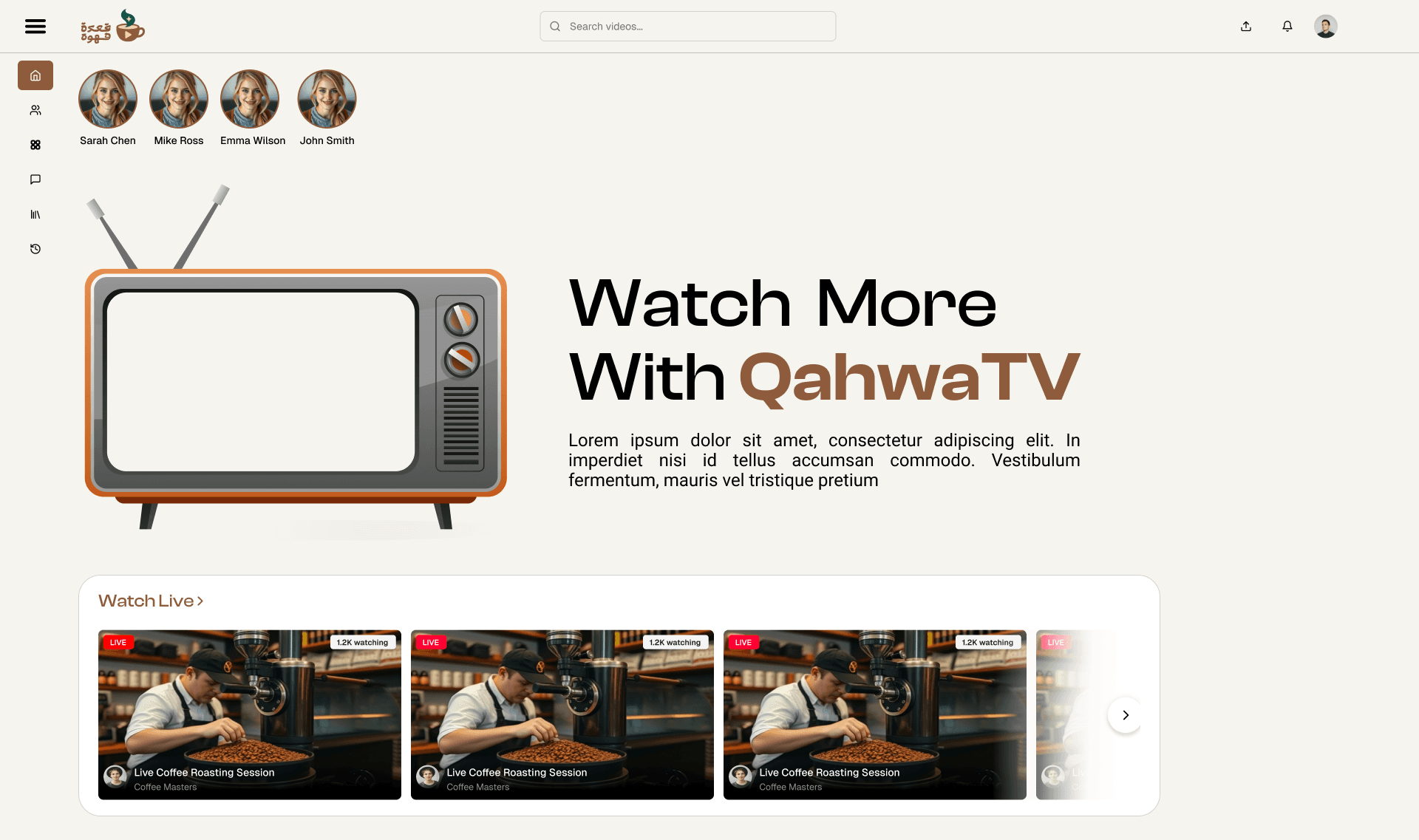
قعدت قهوة (Qahwah) is a web-based social media platform inspired by the traditional Syrian café culture — where people gather to talk, watch content, play games, and share moments.
The idea was simple:
If we can’t gather physically anymore, we build the café online.
This was a university capstone project developed by a team of 5:
- 3 Backend Developers (Laravel)
- 1 Frontend Engineer & UI/UX Designer (Me)
- 1 Supporting Backend/Integration
Final Grade: 96%
Vision
Syrians around the world used to gather in cafés — to watch TV, debate, play chess, and socialize.
With diaspora and distance increasing, we designed Qahwah to:
- Recreate digital gathering spaces
- Enable media sharing (videos & podcasts)
- Allow group conversations ("tables")
- Support real-time communication
- Integrate classic café games (Chess)
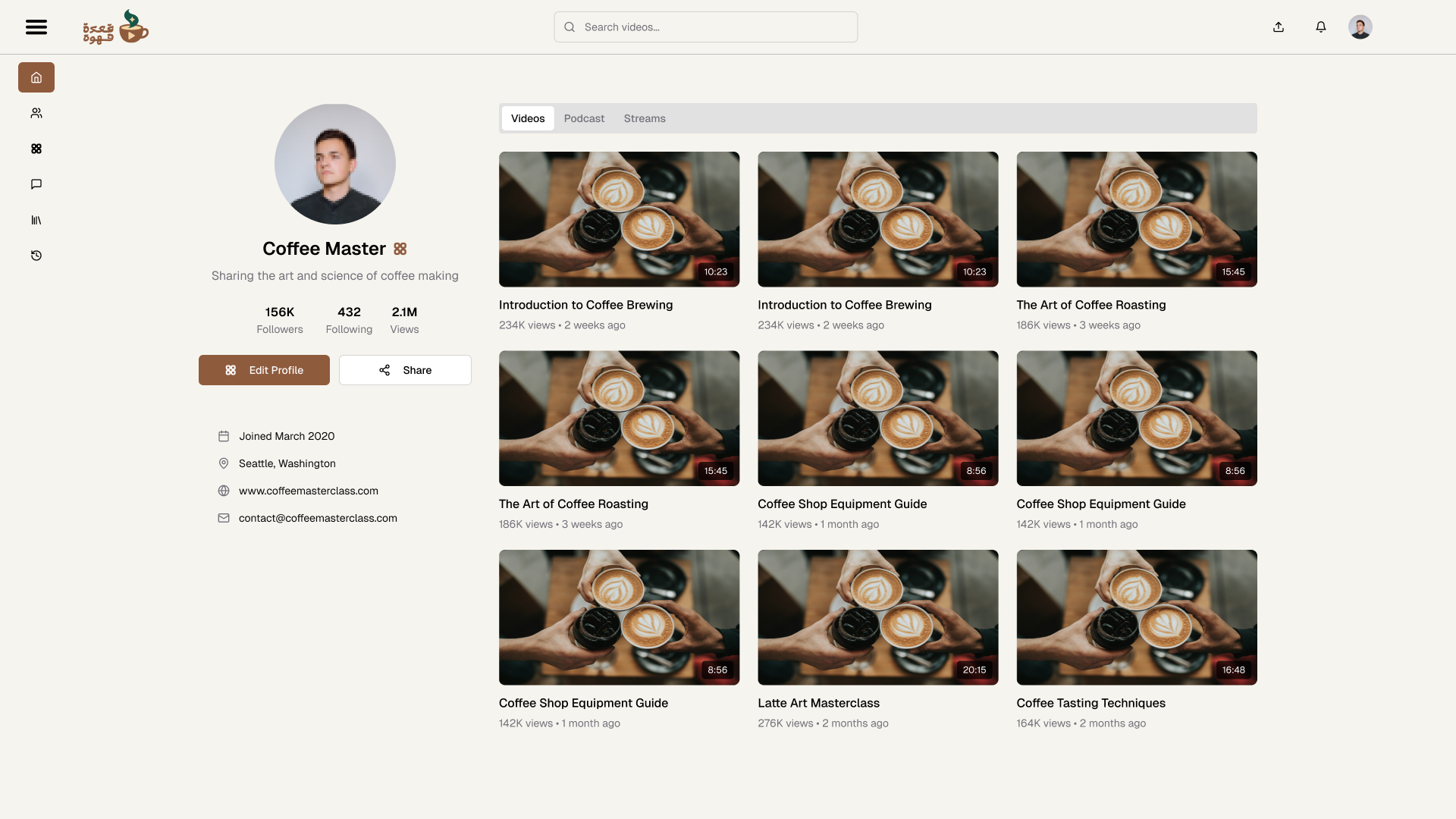
The product blends:
- YouTube-style video feeds
- Instagram-like profiles
- Twitch-inspired stream concept
- Real-time chat & calls
- Community gaming
My Role
UI/UX Design
- Designed visual identity
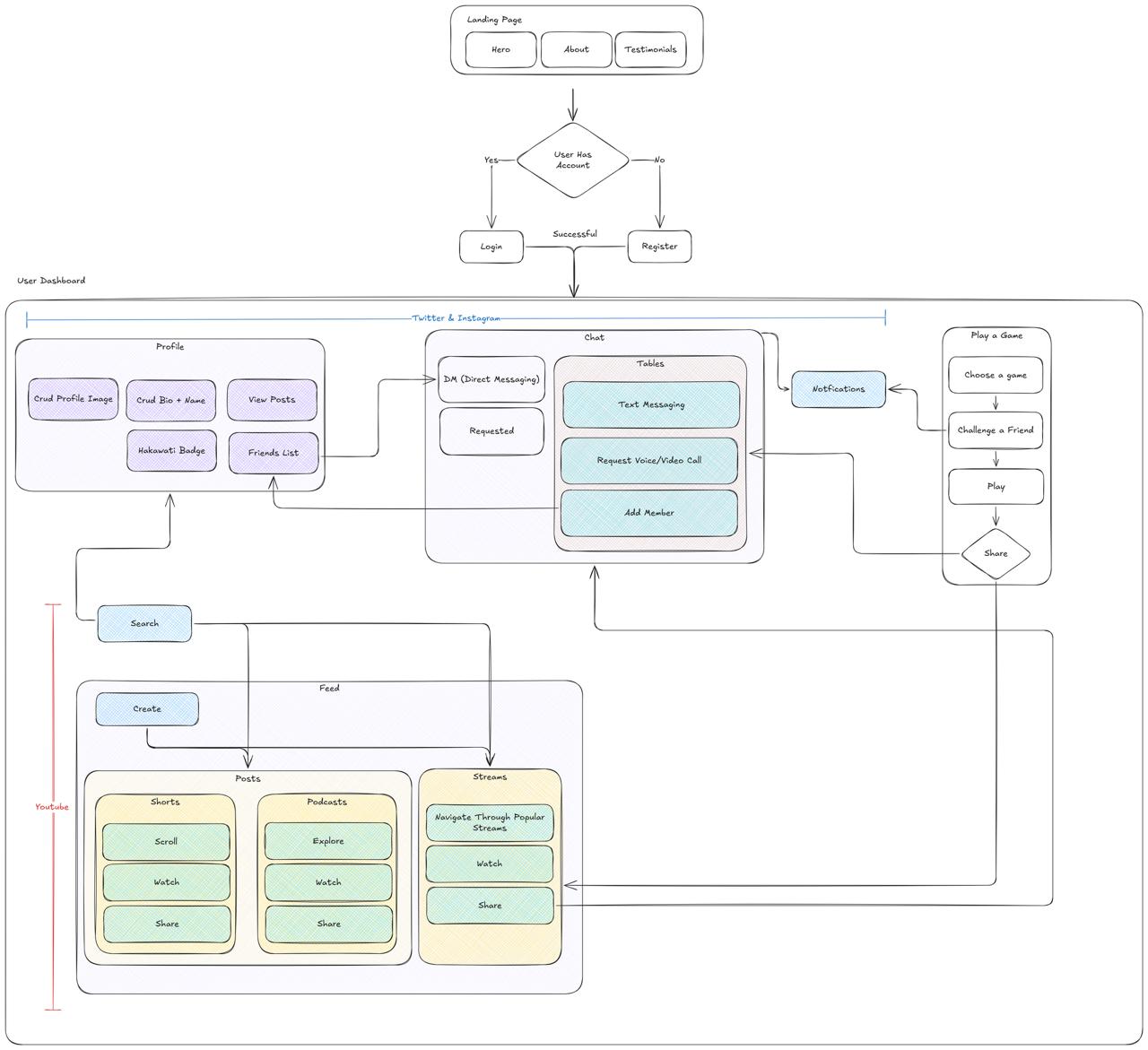
- Created user flow diagrams before development
- Defined typography system
- Defined color system
- Designed core layouts in Figma
- Designed logo
Frontend Engineering (React)
- Built the entire client-side application
- Integrated REST APIs
- Managed state architecture
- Implemented authentication flows
- Built video feed, podcast system, chat UI, profile system
- Implemented chess game integration
Tech Stack
Frontend
- React
- TailwindCSS
- DaisyUI
- React Query
- Axios
- Jotai (atomic state management)
Backend
- Laravel
- Laravel Sanctum (Authentication)
- Laravel Echo (Realtime)
- MySQL
Infrastructure
- AWS S3 (media storage)
- REST API Architecture
Communication & Calls
- GetStream.io (Video Calls)
- Laravel Echo (Realtime Messaging)
Design System
Typography
- Primary Titles: Clash Display Variable
- Secondary Text: Roboto
Color System
- Primary:
#8F5B3D - Background / Spacing:
#F6F4EE - Base: Black
The color palette was inspired by:
- Coffee tones
- Café wood textures
- Warm, community-focused atmosphere
User Flow
Before development, I created a full user flow diagram mapping:
- Registration → OTP verification
- Content browsing
- Upload flow
- Social interactions
- Chat entry points
- Game access
Authentication System
- Email-based registration
- OTP verification
- Sanctum-based authentication
- Protected routes
- Persistent login
Built using:
- Axios for API communication
- React Query for async state
- Jotai for global atomic state
Core Features
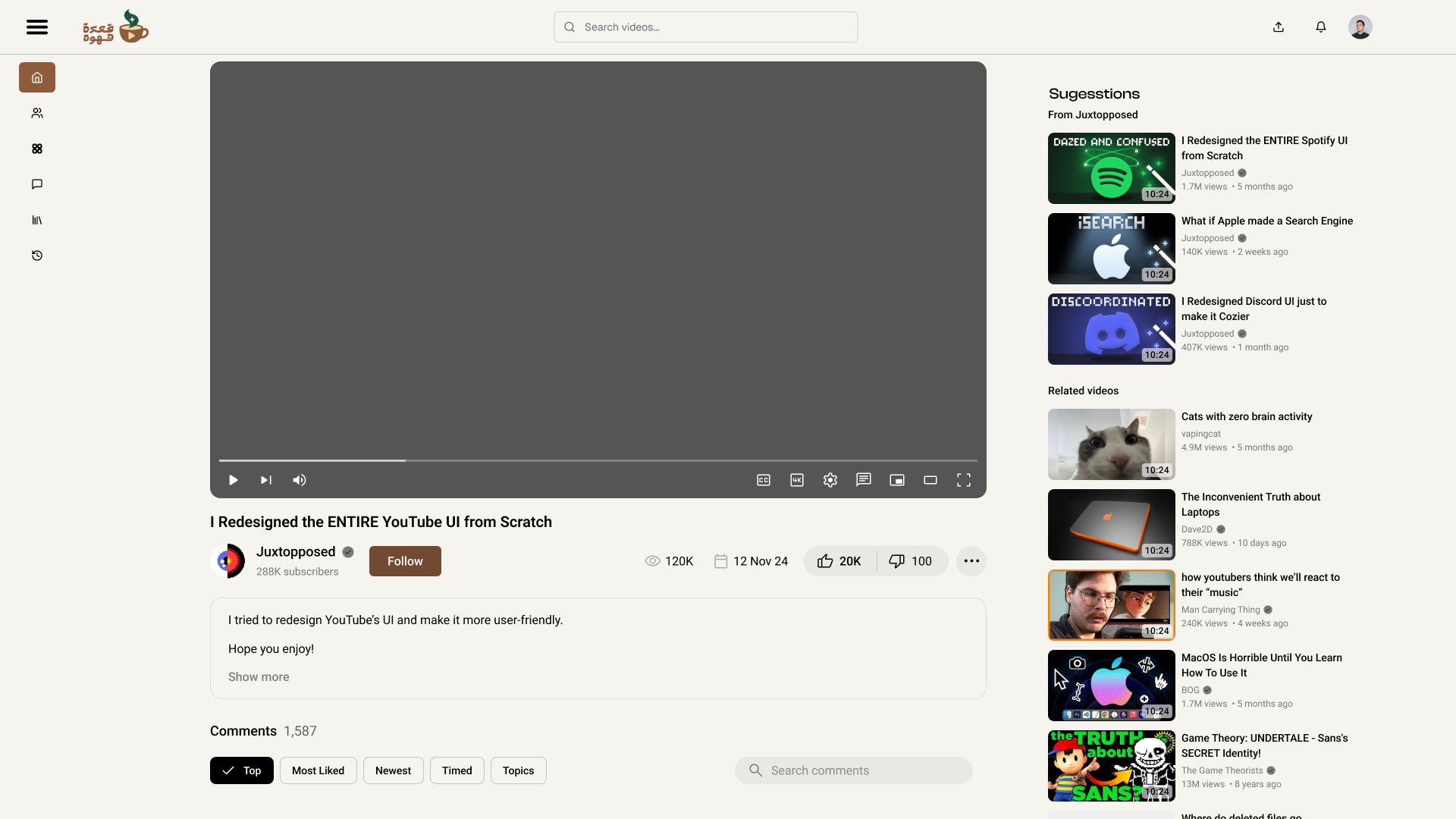
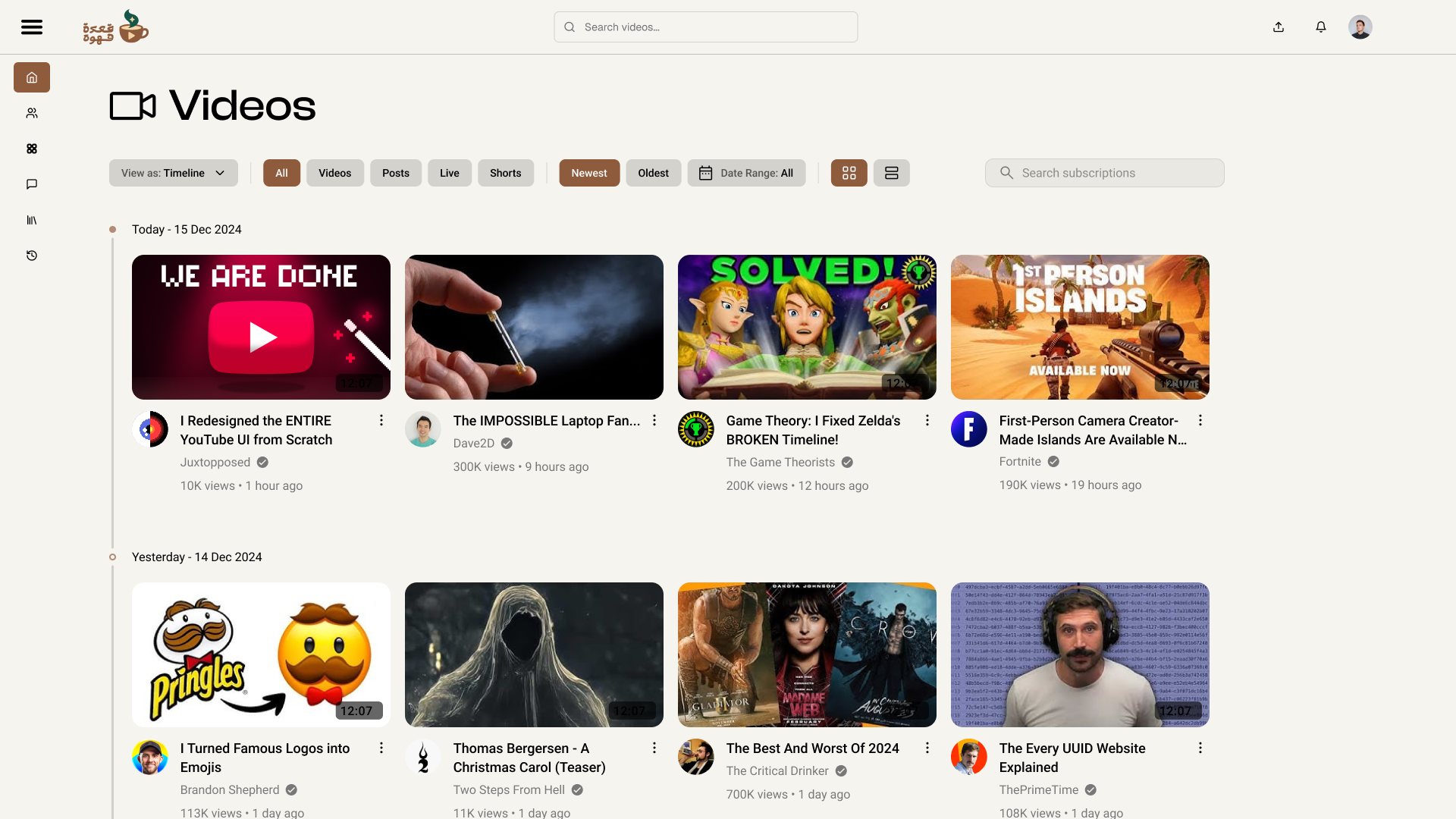
Video Feed
Inspired by YouTube.
Features:
- Infinite scroll
- User-uploaded videos
- Category-based recommendation logic
- Like (filled cup)
- Dislike (spilled cup)
- Show page (video detail page)
Recommendation logic:
- Based on watched categories
- Weighted by engagement
Podcast System
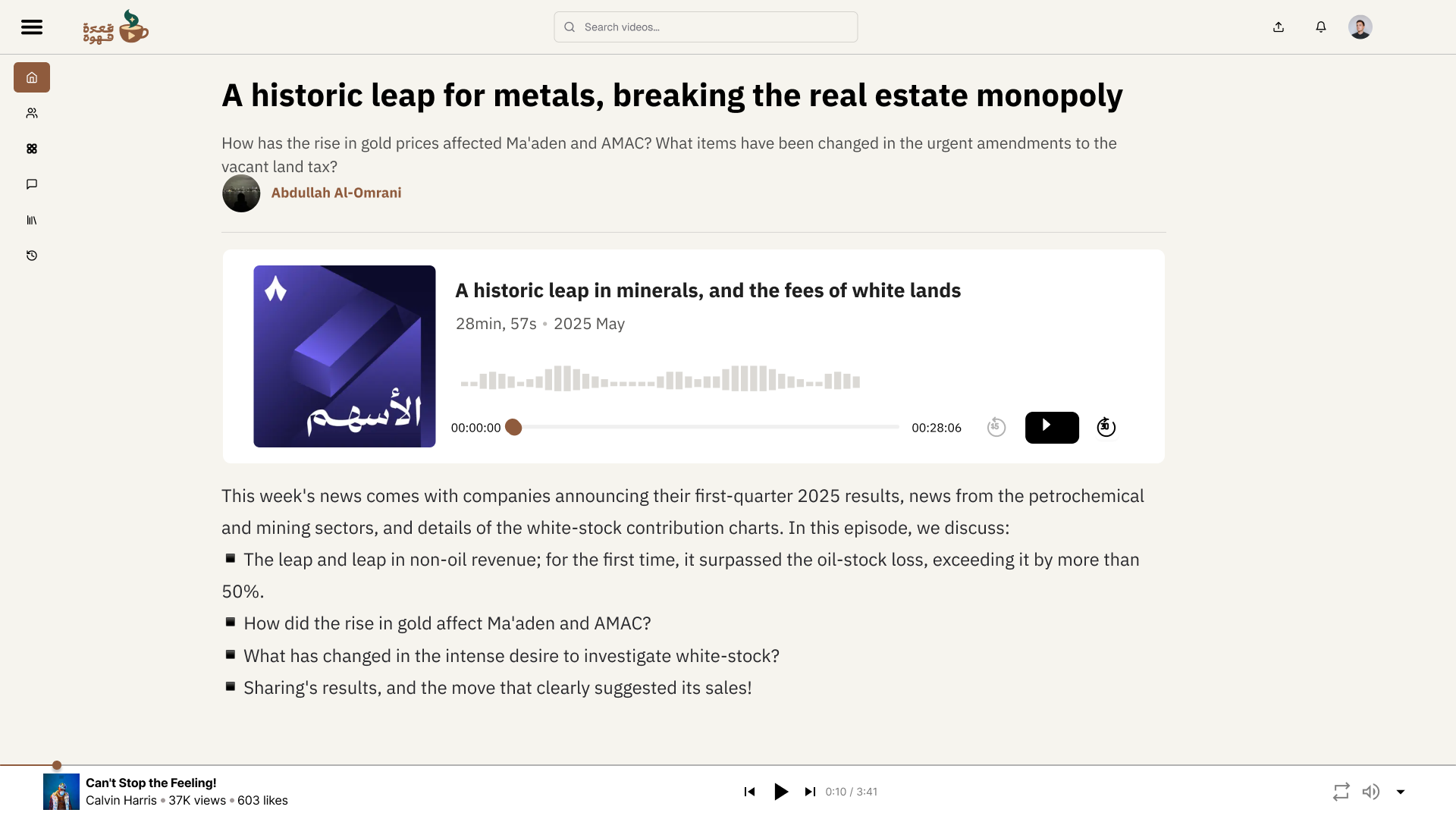
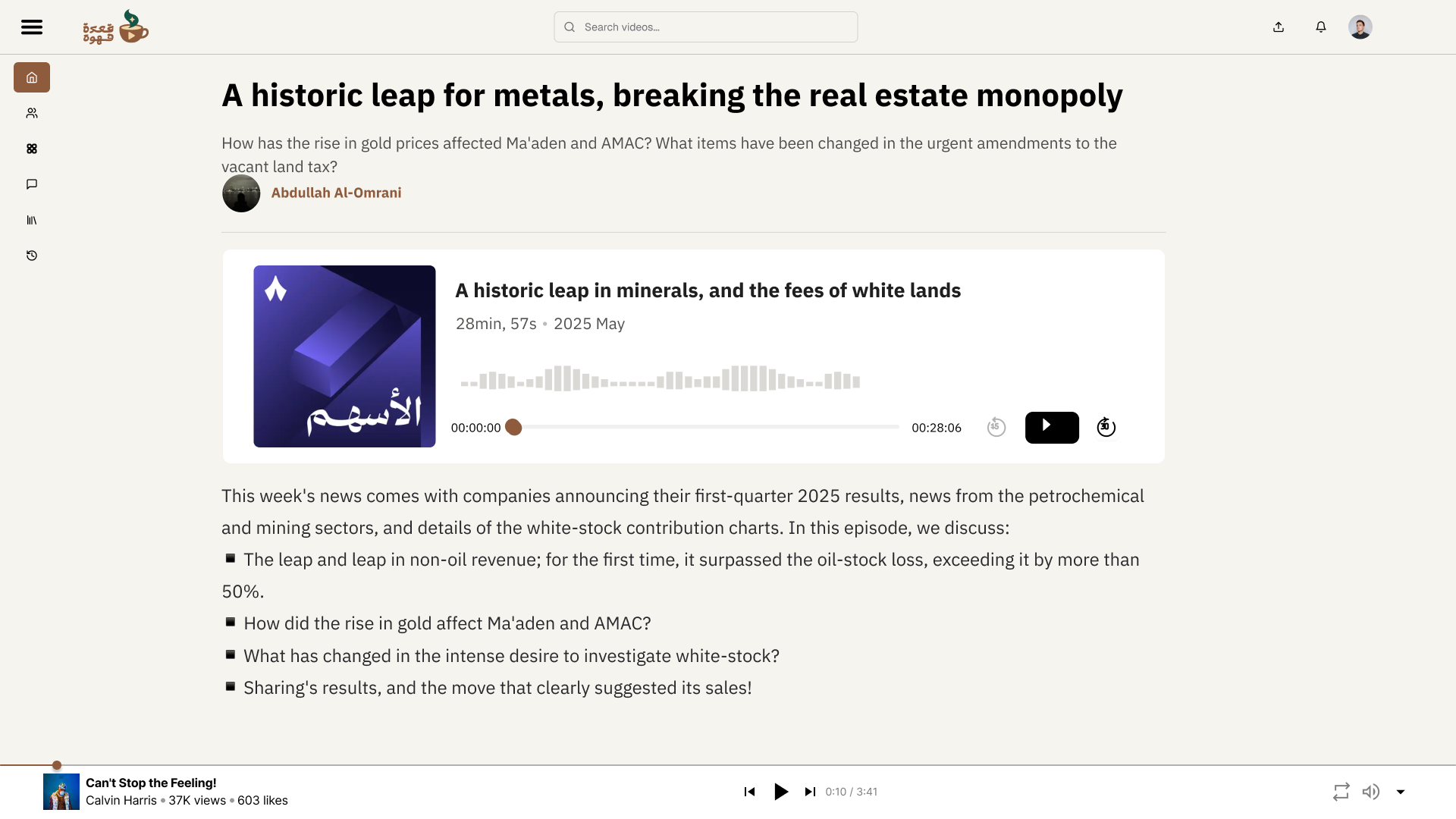
Users can:
- Upload audio content
- Play in background
- Continue browsing while listening
Features:
- Persistent player
- Engagement system (Like/Dislike)
- Show page
Profile System
Inspired by Instagram.
Users can:
- View uploaded content
- See followers/following
- Edit profile
- Access history (watched content)
Search & Social Graph
- Search for other users
- Follow system
- View public content
- Discover creators
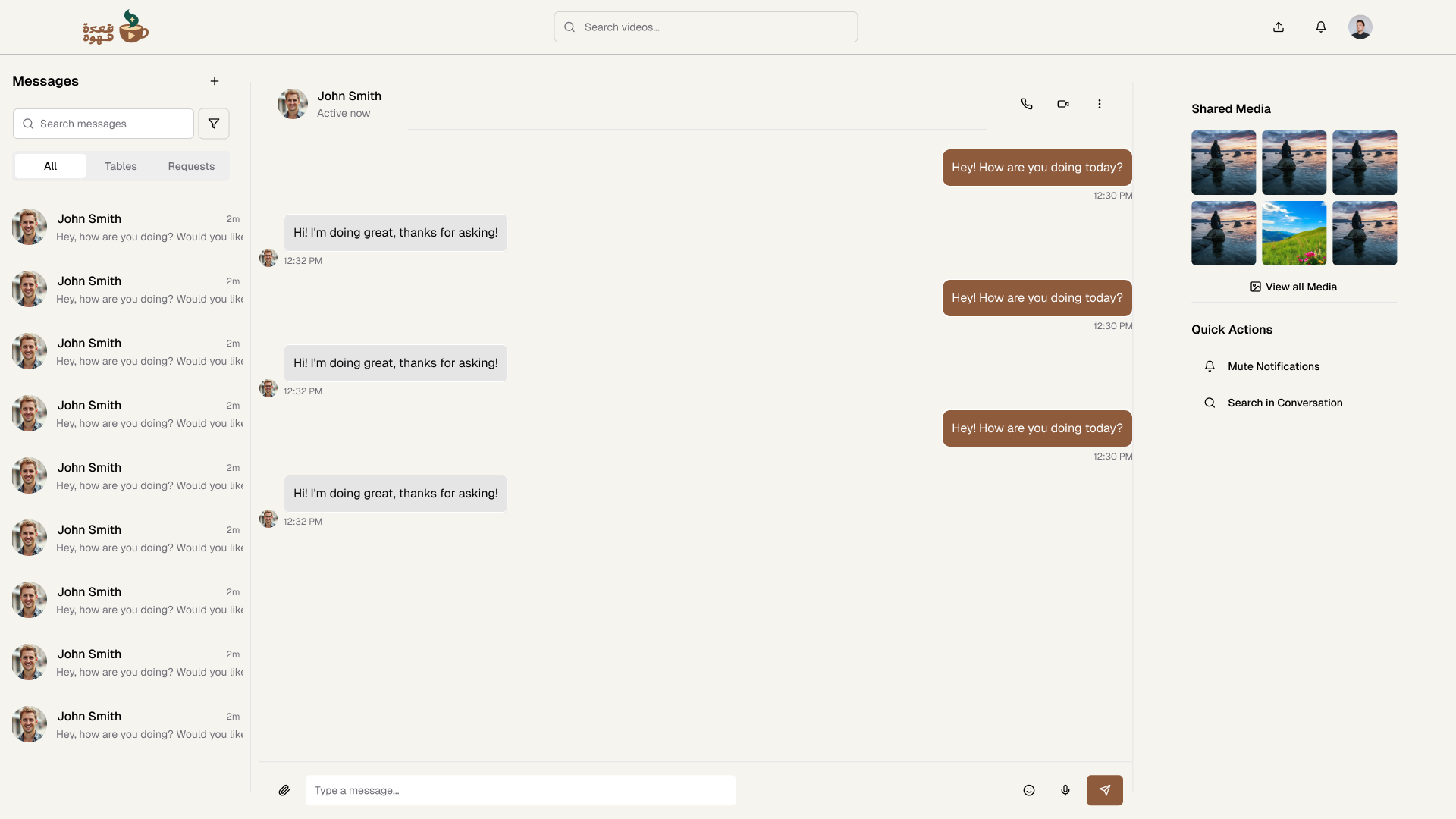
Real-Time Chat
Built with:
- Laravel Echo
- WebSockets
Supports:
- One-to-one messaging
- Group chats ("Tables")
- Realtime message updates
Video Calls
Integrated using:
Supports:
- 1:1 calls
- Group calls
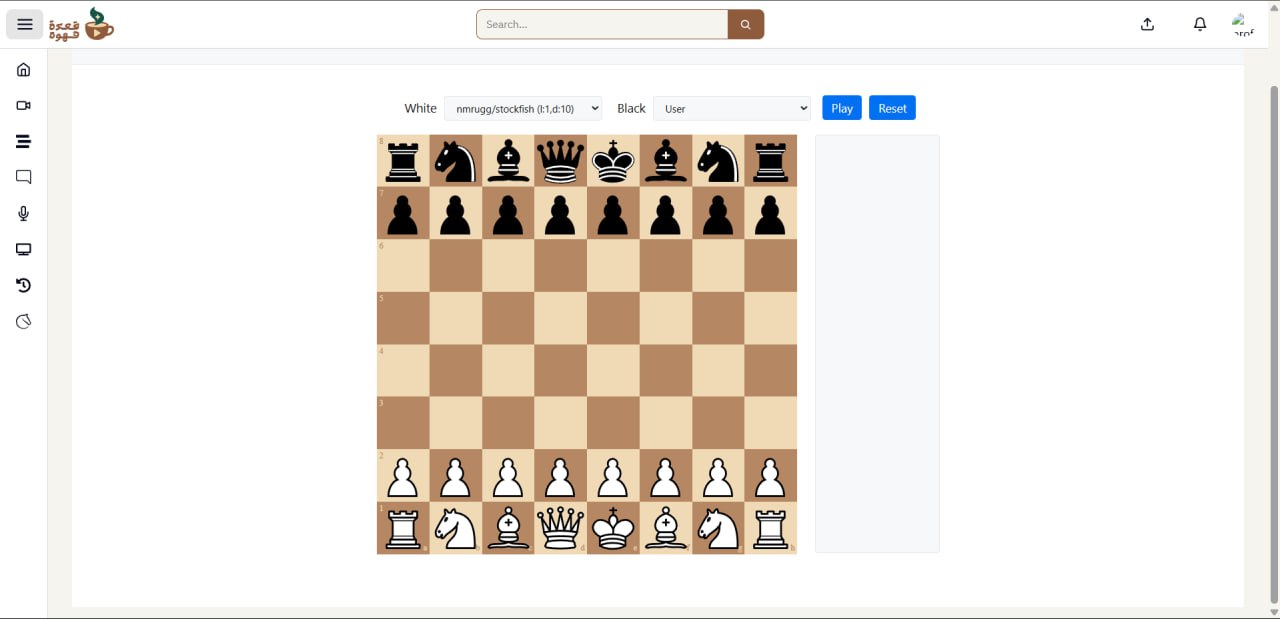
Chess Game
To simulate café culture.
Built using:
- React chess libraries
AI:
- Local AI (~800 ELO)
Purpose:
- Casual, community-focused gameplay
- Recreational engagement
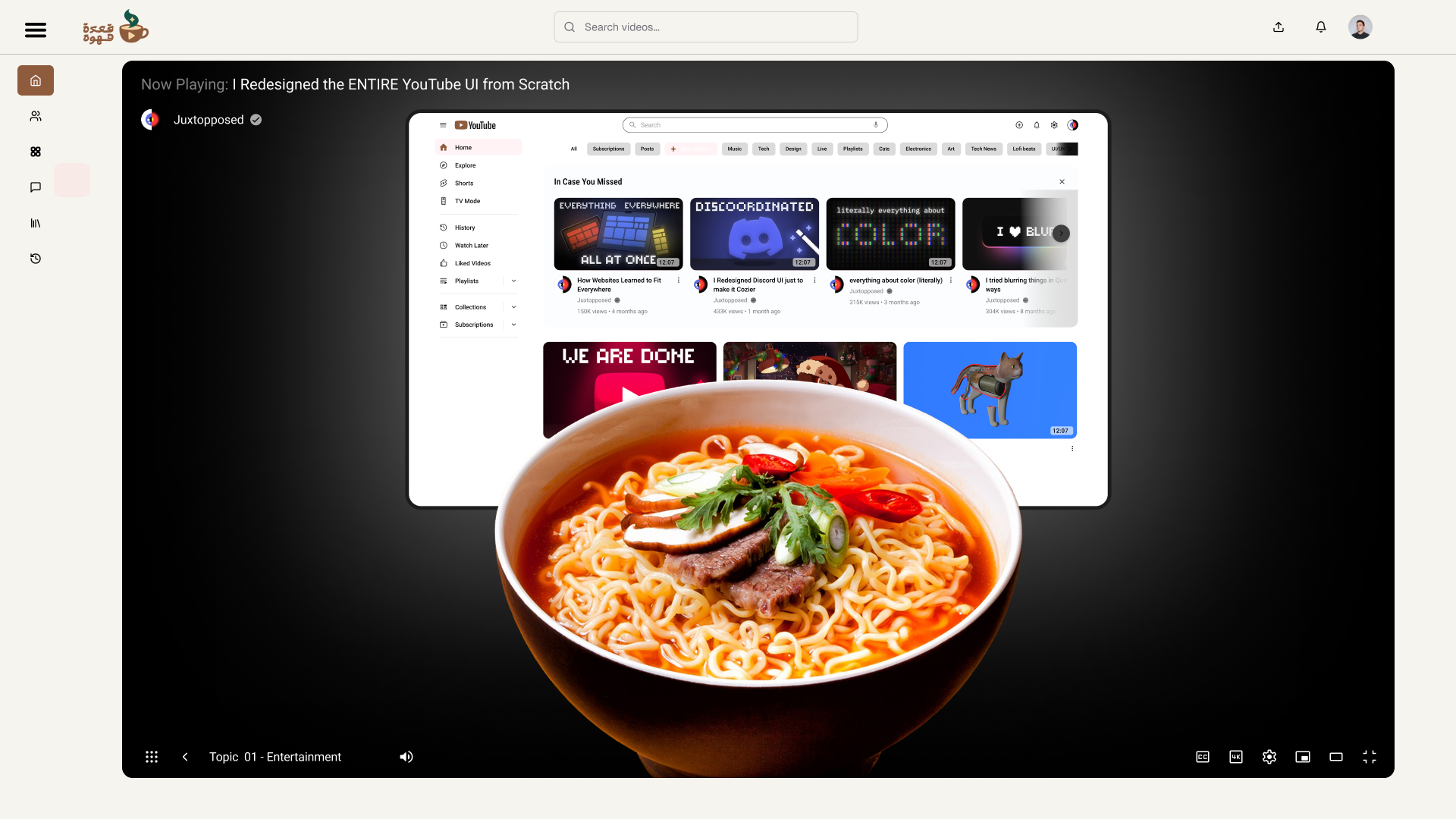
TV Concept (Design Phase)
Designed but not fully implemented.
Concept:
- Curated video queues
- “Channels” managed by users
- Community watch experience
Architecture & State Strategy
Since the application was large and multi-featured, I structured the frontend carefully:
State Management
- Jotai for atomic global state
- React Query for server state
- Separation between client and remote state
Data Strategy
- REST API calls via Axios
- Optimistic updates where possible
- Query invalidation strategy
Component Strategy
- Modular UI components
- Reusable layout shells
- Clean separation of feature domains
Challenges
1. Managing a Large Feature Scope
This wasn’t a simple CRUD app — it included:
- Media streaming
- Realtime chat
- Video calls
- Game integration
Balancing scope vs time was a major challenge.
2. Realtime Synchronization
Handling:
- Live chat updates
- Presence
- Group messaging
3. Media Performance
- Infinite scroll optimization
- Efficient rendering
- Handling user-uploaded content
4. UX Consistency
Without formal research phases, I had to:
- Think systemically
- Maintain visual consistency
- Avoid UI fragmentation
Outcome
- Final Grade: 96%
- Fully functional large-scale web app
- Successfully presented and demonstrated
- Hosted on AWS infrastructure
- Delivered under academic deadline constraints
What I Learned
- How to architect large frontend applications
- Realtime systems integration
- State management at scale
- Designing while engineering
- Cross-team coordination with backend developers
- Feature prioritization under time pressure
Future Improvements
If developed further:
- True streaming system
- Advanced recommendation engine
- Full TV channel implementation
- Speed control for podcasts
- Design system documentation
- Mobile version
- Multilingual support
Reflection
Qahwah was more than a university project.
It was:
- My first large-scale frontend system
- My first real-time app
- My first cultural product design
It represents the intersection of:
Engineering × Design × Identity