
The Octalysis Framework is a groundbreaking approach to gamification, developed by Yu-kai Chou, that analyzes human motivation through eight Core Drives.
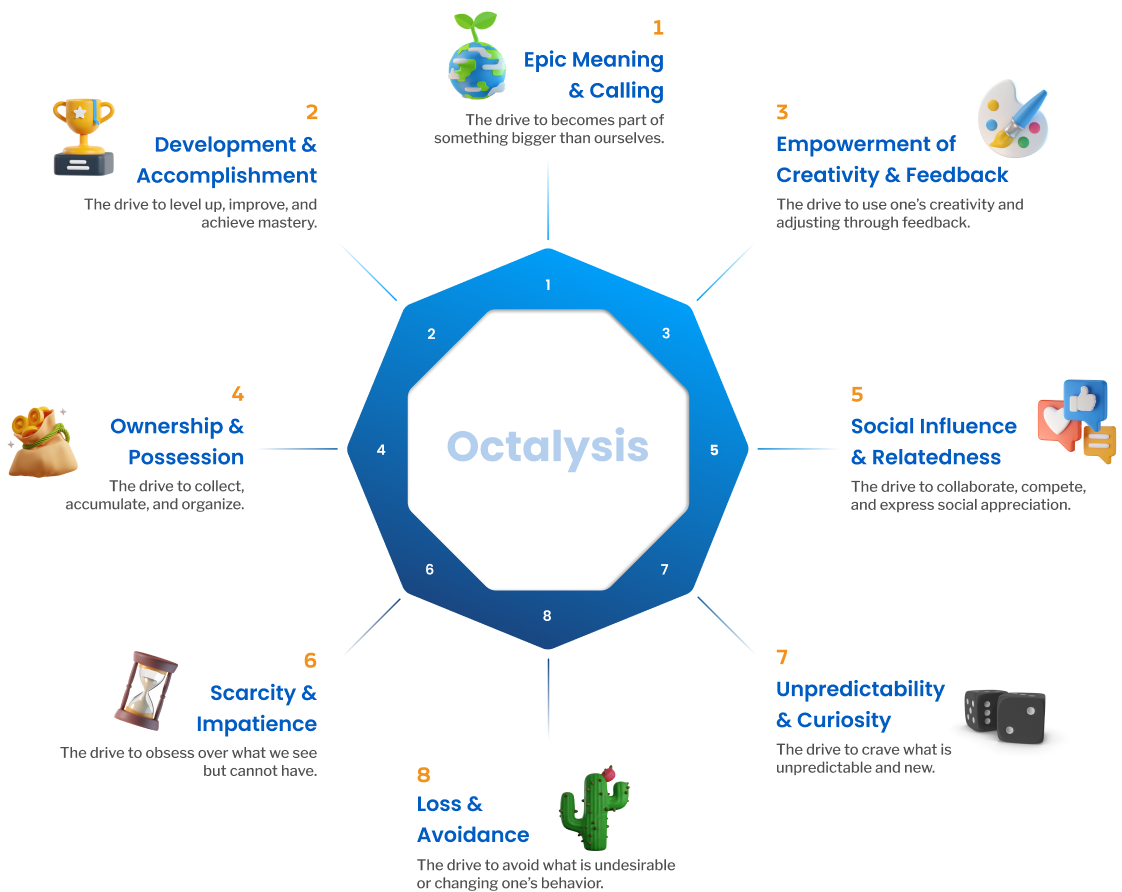
These Core Drives are the essential elements that fuel our behaviors, and by understanding them, the Octalysis Framework enables the design of engaging and motivating experiences.
By applying this framework to various aspects of business, products, and services, it becomes possible to create an environment where users are naturally driven to engage, purchase, and advocate for the brand, resulting in increased loyalty and success.
The 8 Core Drives of Gamification :
1) Epic Meaning & Calling
The player here thinks he is part of something greater than him or he was chosen to do something, an example here would be :
- Narrative
- Elitism
- Humanity Hero
- Revealed Heart
- Beginners Luck
- Free Lunch
- Destiny Child
- Creationist
2) Development & Accomplishment :
this is an internal drive of making progress, developing skills and overcoming challenges.
Challenge here is very important, a badge or trophy without a challenge isn't meaningful.
here are example you would find in games :
- Status Points
- Badges (Achievement Symbols)
- Fixed Action Rewards (Earned Lunch)
- Leaderboard
- Progress Bar
- Quest Lists
- Dessert Oasis
- High Five
- Crowning
- Anticipation Parade
- Aura Effect
- Step-by-Step Overlay Tutorial
- Boss Fights
3) Empowerment of Creativity & Feedback :
Here users are engaged in a creative process where they have to repeatedly figure things out and try different combinations.
they need to be able to see the results of their creativity, receive feedback, and respond in turn.
This is why playing with Legos and painting are fun in-and-of themselves, a game-designer no longer needs to continuously add more content to keep the activity fresh and engaging.
- Milestone Unlocks
- Real-Time Control
- Evergreen Combos
- Instant feedback
- Boosters
- Blank Fills -Plant Pickers
- Poison Pickers
4) Ownership & Possession:
This is the drive where users are motivated because they feel like they own something.
she innately wants to make what she owns better and own even more. Besides being the major core drive for wanting to accumulate wealth. Also, if a person spends a lot of time to customize her profile or her avatar, she automatically feels more ownership towards it too.
- Exchangeable Points
- Virtual Goods
- Build from Scratch
- Alfred Effect
- Collection Sets
- Avatar
- Protection
- Recruiter Burden
- Monitor Attachment
5) Social Influence & Relatedness :
This drive incorporates all the social elements that drive people, including: mentorship, acceptance, social responses, companionship, as well as competition and envy.
- Friending
- Social Treasure/Gifting
- SeeSaw Bump
- Group Quests
- Tout Flags
- Brag Button
- Water Cooler
- Conformity Anchors
- Mentorship
- Social Prod
6) Scarcity & Impatience:
This is the drive of wanting something because you can’t have it. Many games have Appointment Dynamics (come back 2 hours later to get your reward) — the fact that people can’t get something right now motivates them to think about it all day long.
- Appointment Dynamics
- Magnetic Caps
- Dangling
- Prize Pacing
- Options Pacing
- Last Mile Drive
- Count Down Timer
- Torture Breaks
- Moats
- The Big Burn
7) Unpredictability & Curiosity:
wanting to find out what will happen next. If you don’t know what’s going to happen, your brain is engaged and you think about it often. Many people watch movies or read novels because of this drive. However, this drive is also the primary factor behind gambling addiction.
- Glowing Choice
- MiniQuests
- Visual Storytelling
- Easter Eggs
- Random Rewards
- Obvious Wonder
- Rolling Rewards
- Evolved Ul
- Sudden Rewards
- Oracle Effect
8) Loss & Avoidance :
This core drive is based upon the avoidance of something negative happening. On a small scale, it could be to avoid losing previous work. On a larger scale, it could be to avoid admitting that everything you did up to this point was useless because you are now quitting
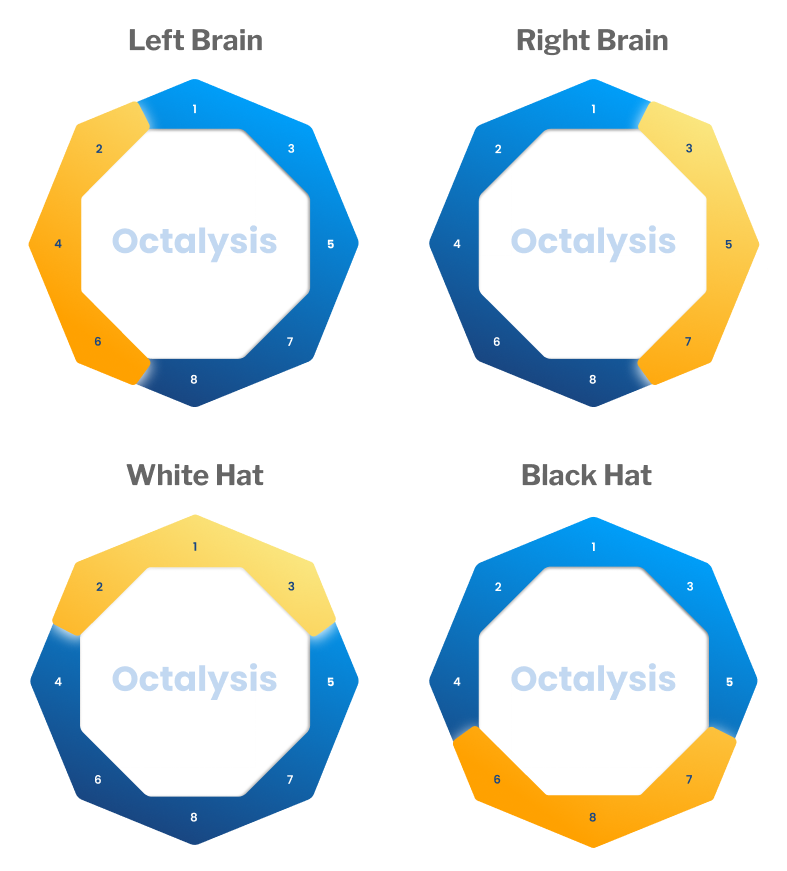
Octalysis distinguishes between Left Brain Core Drives (logic, calculations, ownership) and Right Brain Core Drives (creativity, self-expression, social aspects). While Left Brain Core Drives are extrinsic motivators, Right Brain Core Drives are intrinsic motivators.
Designers should focus on motivating users through intrinsic motivators, making the activity itself fun and rewarding.
Octalysis also differentiates between “White Hat Gamification” (positive motivators) and “Black Hat Gamification” (negative motivators). Techniques that utilize positive motivators create a more satisfying experience, while techniques that rely on negative motivators may leave users feeling manipulated.
Note: the Left Brain/Right Brain Core Drives are not considered true brain science; they are merely symbolic as it makes the framework easier and more effective when designing.
References :
Yu-kai Chou website
a Medium Article The Octalysis Framework for Gamification & Behavioral Design
a website that helps to find all gamified apps Gamifylist